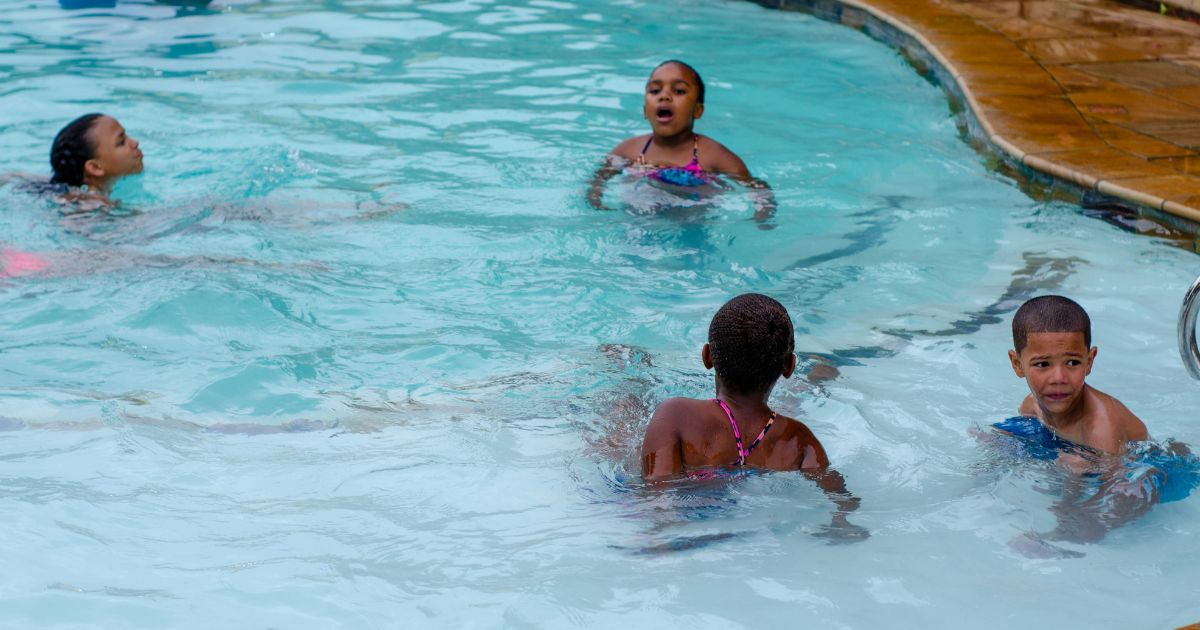
You booked the lesson. You bought the goggles. You drove to the pool on a Saturday morning, and your child made it as far as the change room door before the crying started. Or it was a birthday party at a community centre in Scarborough, and your kid spent the hour wrapped in a towel on the deck.
If that sounds familiar, you’re in a larger club than you think. Parents searching for swimming lessons for kids afraid of water in Toronto usually aren’t shopping for a program. They want reassurance that their child isn’t broken, and something practical to try this week.
The short version: fear of water in young children is common, it’s rarely permanent, and pushing harder almost always makes it worse. What helps is the opposite. Smaller steps, more predictability, and an adult who isn’t in a hurry.
This guide covers why the fear shows up, what it looks like on the pool deck, what you can do at home, and how to tell when your child needs a different lesson format.
Why Is My Child Suddenly Afraid of Water?
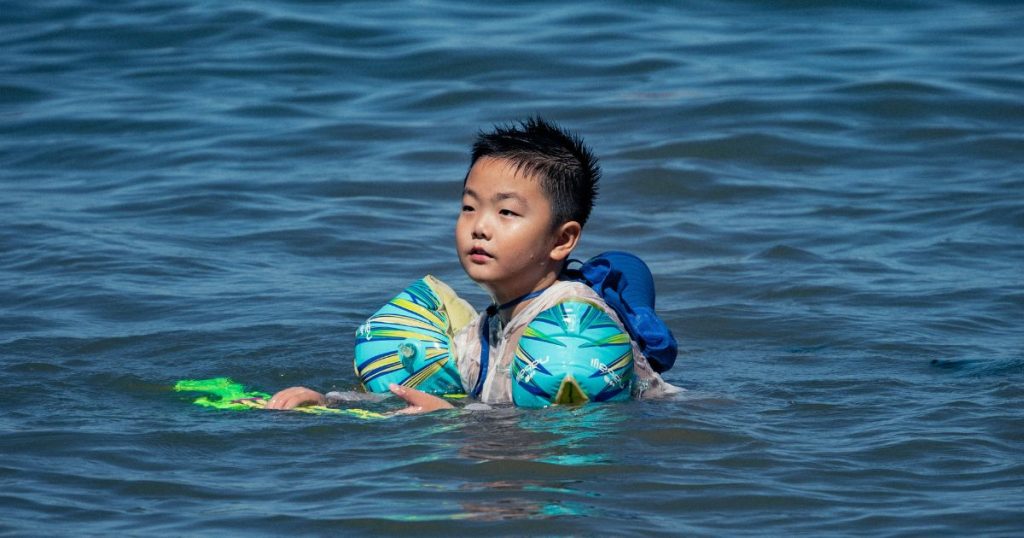
Most water fear in kids traces back to one of three things, and they call for different responses.
Something unpleasant happened. A wave to the face at the beach. An older cousin who thought dunking was funny. Water up the nose during a shampoo. It doesn’t have to look dramatic to leave a mark on a four-year-old.
Sensory overload. This one gets missed constantly. A public pool is loud. Voices echo off tile, the air smells like chlorine, the deck is cold, and twenty other kids are shrieking. A child who is fine in the bath may still find that overwhelming, and the fear gets blamed on the water when the real problem is the room. The YMCA’s guidance for parents makes the same point: familiarity has to come before instruction.
Plain unfamiliarity. Some kids have simply never been in a pool. Nothing bad happened. They just don’t know what to expect, and the deep end looks bottomless when you’re three feet tall.
There’s a fourth pattern worth naming: the child who loved the water last summer and is terrified this year. That reversal alarms parents, but it’s usually developmental. Around ages three to five, kids get much better at imagining what could go wrong. The fear is a sign their brain is working, not a sign of trauma.
What Fear Actually Looks Like on the Pool Deck
The obvious version is crying and refusing to get in. The quieter versions are easier to miss. Watch for the child who suddenly has a stomach ache every Saturday morning, or negotiates in the car: can we just watch today, can we go next week. Or the kid who gets in but never lets go of the wall.
It also helps to know which fear you’re dealing with, because the fix differs:
- Fear of the face going under is the most common, and it’s about breathing and control, not depth.
- Fear of depth shows up as a child who is happy in the shallow end and rigid the moment their feet leave the bottom.
- Fear of separation isn’t about water at all. The child is fine with you and inconsolable with an instructor.
Age matters too. A three-year-old who cries at the first lesson is behaving normally. An eight-year-old with two years of lessons who still won’t submerge has hit a specific sticking point worth naming out loud with the instructor.
What You Can Do at Home Before the Next Lesson
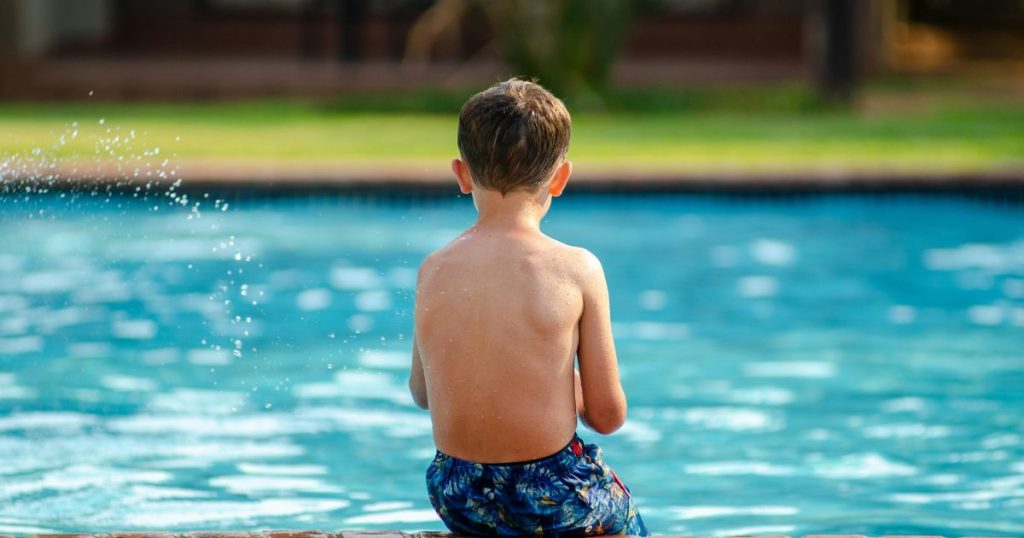
This is where most of the progress happens, and none of it requires a pool.
Use bath time as low-stakes practice
Warm water, no audience, no clock. Pour a cup of water over the back of the head, then the forehead. Blow bubbles together. Let your child pour water over you first, which flips the power dynamic and usually gets a laugh. Stop before they get upset, not after.
Visit the pool without swimming
Go, sit on the deck with a snack, watch other kids for ten minutes, and leave. Do it twice. It sounds like a wasted trip, but you’re teaching your child that the building is boring and safe.
Watch your language
“There’s nothing to be scared of” tells a frightened child their feelings are wrong. “The water feels weird at first, and you can hold my hand the whole time” tells them you understand and there’s a plan.
Check your own comfort level
Kids read adults constantly. If you’re a nervous swimmer yourself, your child likely knows it. That’s not a reason for guilt, and plenty of GTA parents learn alongside their kids. It’s just worth knowing what you’re modelling.
For a fuller pre-lesson checklist, our guide to preparing your child for their first swimming lesson covers the practical side, from what to pack to how to handle the change room.
How Swimming Lessons for Kids Afraid of Water Build Confidence
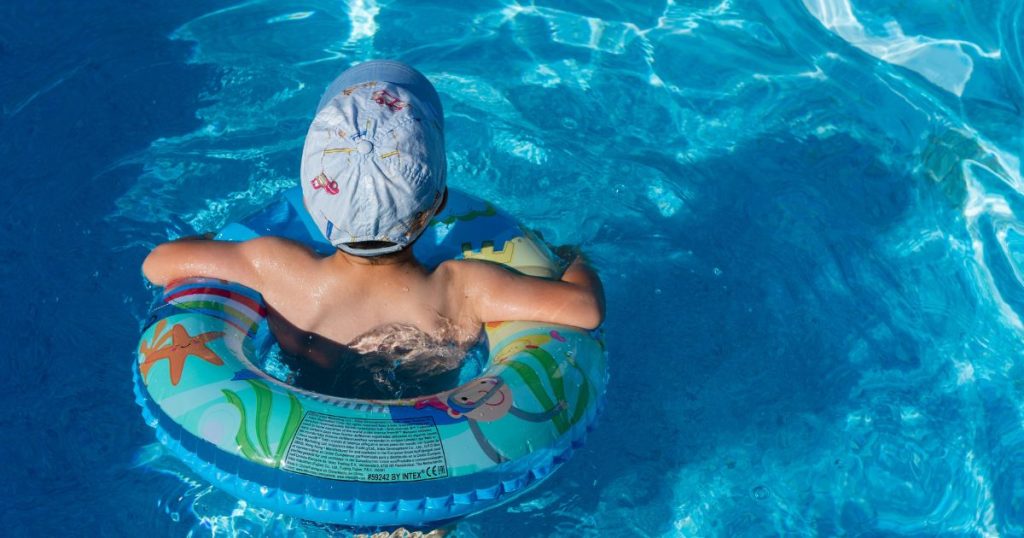
A good lesson for a nervous child looks almost nothing like the lesson you’re picturing.
The first steps are tiny on purpose. Before anyone asks your child to put their face in, they’ll sit on the edge and kick, then walk in the shallow end, then splash their own face with their own hands, which feels completely different from having water poured on them. Each step is small enough that success is close to certain, and success is the point.
Routine does a lot of the work. Same greeting, same warm-up, same songs, same order every week. Predictability shrinks anxiety faster than encouragement does, which is why a child four lessons in with the same instructor often behaves like a different kid.
The instructor spends the first ten minutes not teaching swimming. They’re building trust, watching how your child responds to the water, and finding out where the actual line is. At Alex’s Swim School, that’s part of why class sizes stay small. A nervous kid in a crowded class gets exactly the wrong kind of attention, which is none of it. It’s also worth checking that instructors hold current Lifesaving Society Swim Instructor certification, which has to be renewed every two years.
The milestones are redefined. For a fearful child, “chin in the water” is a real achievement. So is letting go of the wall for three seconds. Celebrating those keeps momentum going during the weeks when nothing that looks like swimming is happening. Structured programs like the Lifesaving Society’s Swim for Life curriculum are built as progressions for that reason, starting with comfort and breath control long before strokes.
One thing to keep in mind, and the injury prevention charity Parachute is blunt about it: lessons build skill and comfort, but they don’t replace supervision. A comfortable swimmer still needs an adult watching within arm’s reach.
Are Private Swim Lessons Better for Nervous Children?
Sometimes, yes. Not always.
Private lessons make sense when your child freezes in a group, when they’ve already had a lesson that went badly, when they have sensory sensitivities, or when the fear needs one person’s full attention for thirty minutes. One instructor, one child, no audience, and your kid sets the pace.
Small group lessons can work better than parents expect, though. Kids this age are enormously influenced by other kids. A four-year-old who won’t put her face in for an instructor will often do it fifteen seconds after watching the girl beside her. Peer modelling is a real teaching tool, and you lose it one-on-one.
The honest trade-off is cost. Private lessons run more per session, and for many families the right answer is a few private sessions to get past a specific block, then a move into a small group. If you’re weighing the two, we’ve compared private and group swimming lessons side by side in more detail.
How Long Does It Take a Scared Child to Get Comfortable in the Water?
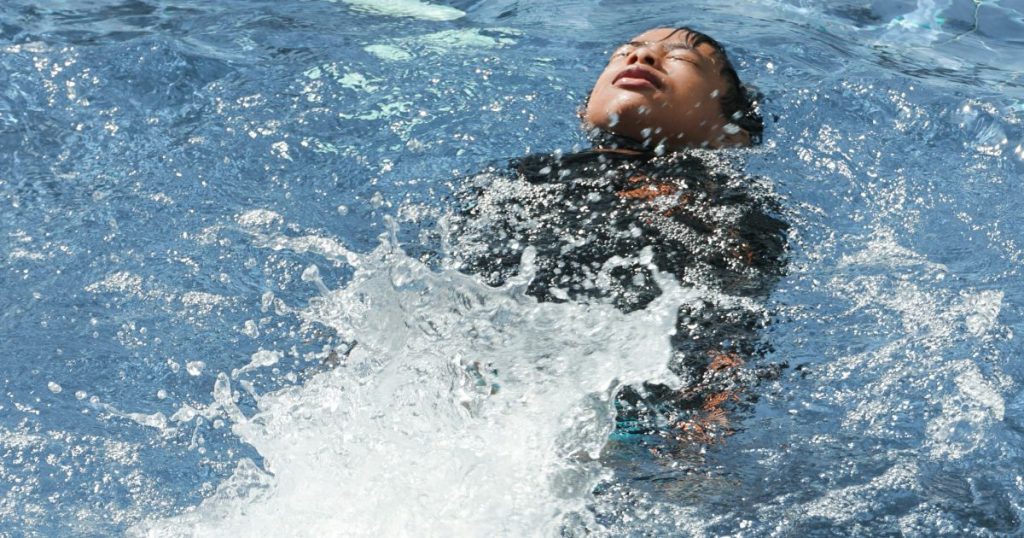
Longer than a weekend, and less time than you fear.
For a child with mild apprehension and no bad history, four to eight weeks of consistent lessons is a reasonable window to see real change: getting in without a fight, putting their face in, floating with support. For a child with a strong fear or a bad past experience, it can take a few months, and progress won’t be a straight line. Expect a good week followed by a bad one. That’s normal.
Two things move the needle most. Frequency beats duration: two thirty-minute sessions a week does more than one full hour. And consistency beats frequency. A child who attends six straight weeks will almost always be further along than one who attends ten scattered lessons over four months.
We look at typical timelines in our post on how many lessons it takes to learn to swim, and it’s worth reading alongside our take on what age is normal to start if you’re wondering whether you’ve left it too long. You almost certainly haven’t.
Finding Swimming Lessons for Kids Afraid of Water Across the GTA
Not every program is set up for a fearful child, and most won’t tell you that upfront. A few things to ask before you register:
How many kids per instructor? For anxious preschoolers, the difference between a class of four and a class of eight is the difference between being noticed and being managed.
How warm is the water? Cold water makes tense kids tenser. Teaching pools are usually kept warmer than lap pools, and it’s a fair question on the phone.
What happens if my child won’t get in? A program with a plan for this has seen it before, and won’t treat repeating a level as a failure.
Timing matters too. Winter is quietly the best season to start. Indoor pools across Toronto, Markham and Vaughan run year-round, and a child who builds confidence between January and April reaches the first cottage weekend already comfortable. The City of Toronto’s swim lesson pages note that popular classes fill and run waiting lists, so planning ahead helps.
Alex’s Swim School runs lessons for ages three and up across Scarborough, Markham, Toronto and Vaughan, with certified instructors and small classes built around exactly this kind of slow start.
Frequently Asked Questions
Should I force my child into the water if they refuse?
No. Forcing a frightened child into a pool tends to confirm the fear rather than fix it, and it can undo weeks of progress. Let them set the pace and give the small steps real credit. A child who sits on the edge and kicks for three lessons is still working.
My child was fine last year and is scared now. What happened?
This is common between ages three and five, when kids get much better at imagining risk. Go back a step, rebuild comfort in shallow water, and most children move through the phase within a few weeks.
Is my child too old to start at eight or nine?
Not at all. Older beginners often move faster than toddlers because they can follow instructions and self-correct. The thing to manage is self-consciousness, which argues for a class of similar-aged beginners rather than one full of preschoolers.
Do swimming lessons make my child safe around water?
They make your child more capable and more comfortable, which lowers risk. They don’t make any child safe on their own. Active supervision, life jackets on boats, and fenced backyard pools still apply.
What if my child cries during every lesson for a month?
Ask the instructor what they’re seeing in the water, since it’s often different from what you see from the viewing area. If there’s no movement after four to six weeks, a few private sessions with Alex’s Swim School or a change of instructor usually beats pushing through.
Start Where Your Child Actually Is
Three things worth carrying away. Water fear in kids is normal, and it isn’t a verdict on your child or your parenting. Progress comes from steps small enough to succeed at, repeated often. And format matters: a nervous child in the wrong class can stall for months in a way they never would one-on-one.
Your next step doesn’t have to be booking a lesson. It can be a bath with a cup of water and no agenda.
When you’re ready, Alex’s Swim School offers private sessions for children who need a quieter start. You can book a private lesson online or call 647-458-0481 to talk it through first. If you’re unsure which format fits your child, ask us before you register rather than after.